




By the time Luto reaches its conclusion, the lasting impression is not that of having simply completed a psychological horror game, but of having passed through an experience that feels more intimate, more disquieting, and at times emotionally difficult to endure. This is not a work oriented toward immediate entertainment or easily consumable tension. It avoids conventional gratification, eschews spectacle, and shows little interest in accessibility. Instead, it is designed to linger – to settle into the player’s perception gradually and remain there, extending the experience beyond the act of play itself. It is this sustained aftereffect, more than any individual moment, that defines its impact. What stands out most is Luto’s ability to transform a relatively confined space into a layered emotional experience. The house, initially appearing as a deliberately limited environment, steadily expands in meaning and symbolic weight. It becomes fluid and unstable – simultaneously setting, memory, emotional echo, and form of containment. Rather than serving as a backdrop for horror, it functions as its primary expressive medium, shaping not only what the player sees, but how they interpret what they experience. A defining strength of the game lies in its disciplined approach to pacing. In contrast to genre conventions built around escalation and frequent stimulation, Luto relies on accumulation and restraint. Tension is rarely released in conventional peaks; instead, it builds gradually, recedes, and returns in altered form. The result is an experience that is less immediately explosive than it is persistently resonant, designed to persist in the player’s mind rather than resolve cleanly within the moment of play. This same design philosophy, however, also demands significant engagement from the player. Luto is not structured for passive consumption. It requires patience, attentiveness, and a willingness to inhabit ambiguity. Repetition, silence, and interpretative openness are not incidental features but core elements of its design language. Thematically, the game is striking for the seriousness with which it weaves emotional suffering into its very structure. Grief, anxiety, depression, and psychological entrapment are not approached as narrative topics alone, but are embedded into the fabric of the experience itself – expressed through spatial design, pacing, sound, and interaction. This tight alignment between form and meaning stands as one of the project’s most accomplished qualities, underscoring the potential of video games not merely to represent emotional states, but to actively embody them. At the same time, this approach inevitably produces an experience that can feel heavy, even oppressive. The discomfort it generates does not stem from traditional horror mechanics, but from sustained emotional pressure. Luto does not offer catharsis in any conventional sense; instead, it maintains a state of psychological tension that resists resolution. While this choice is consistent and artistically coherent, it also makes the experience inherently demanding. Ultimately, Luto is less defined by mechanical breadth or structural variety than by the precision of its emotional design. It is a focused, often suffocating experience, but one marked by clarity of intent and notable restraint in execution. Above all, it succeeds in articulating a specific emotional condition: the lingering persistence of grief, the cyclical weight of regret, and the difficulty of escaping unresolved psychological states. Its strongest resonance will likely be found with players who recognise these emotional landscapes. While not an easy experience, Luto offers something quieter and more enduring in return: a form of recognition that, for some, may feel uncomfortably personal.
Leer artículo completo
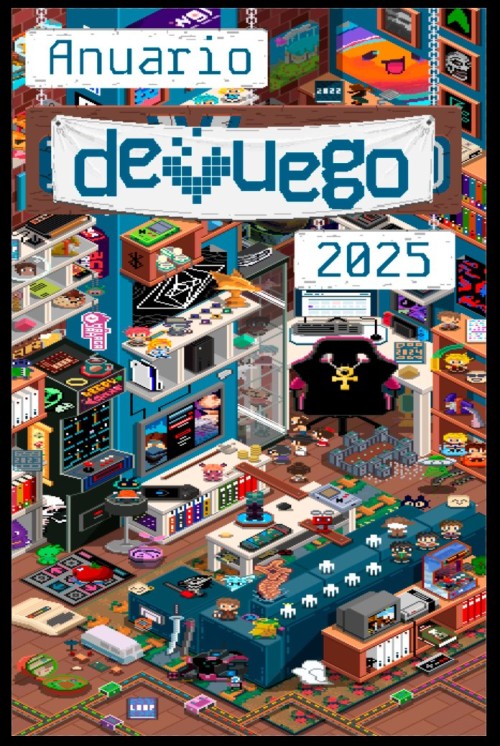
¡Ya puedes reservar el Anuario DeVuego 2025!
El libro definitivo de la industria del videojuego español. Lanzamiento: 17 de septiembre
Disponible en Héroes de Papel · Reserva tu ejemplar y asegúrate de no quedarte sin él
Reservar Anuario DeVuego 2025
Más sobre el Anuario