Information / Synopsis
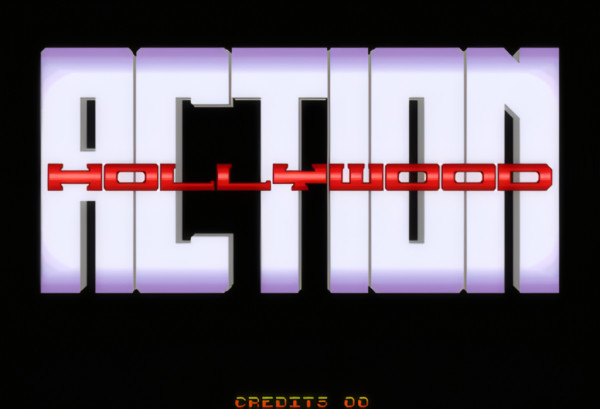
Action Hollywood is a two-player cooperative action arcade game developed by Proyesel in 1995 and distributed in Italy by Electronic Devices. It is credited to the team of Marcos Hernández, Xavi Artigas and Jose Luis Sánchez Romero, who had recently joined the studio from Ecogames.
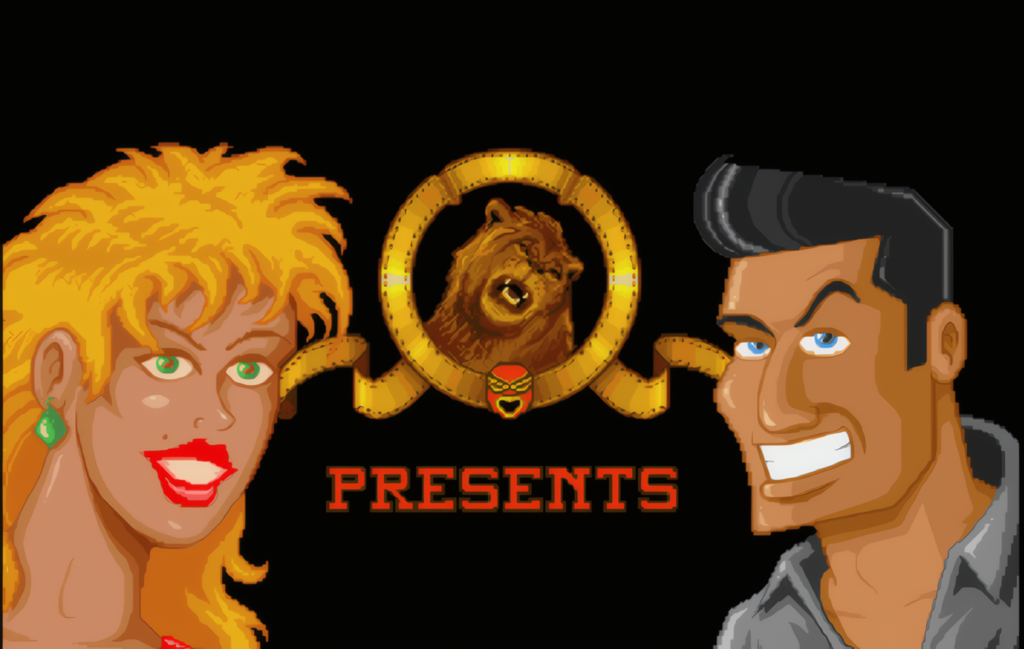
The game revisits a classic 1980s mechanic, in the vein of Humphrey (Zigurat, 1988): the player moves through a self-contained, grid-based stage, activating blocks and controlling space while enemies patrol along defined patterns. Cooperative play is not an added mode but the foundation of the design. Lisa and Fred share the board from the outset, competing for blocks, getting in each other's way at times, and having to coordinate at others.
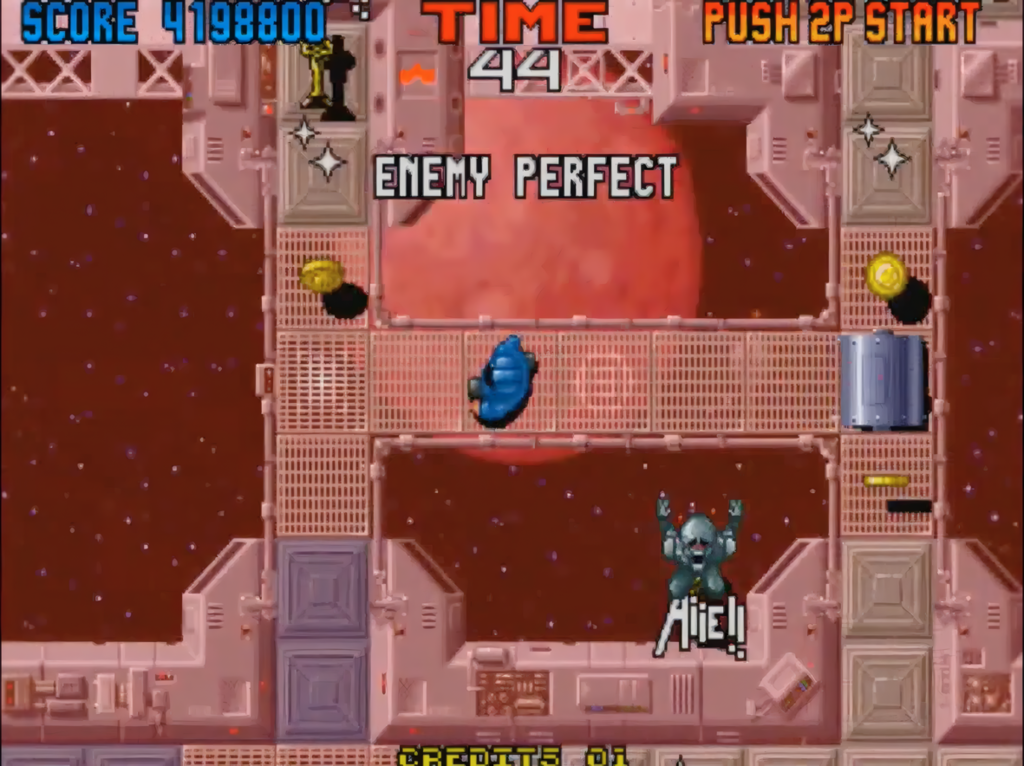
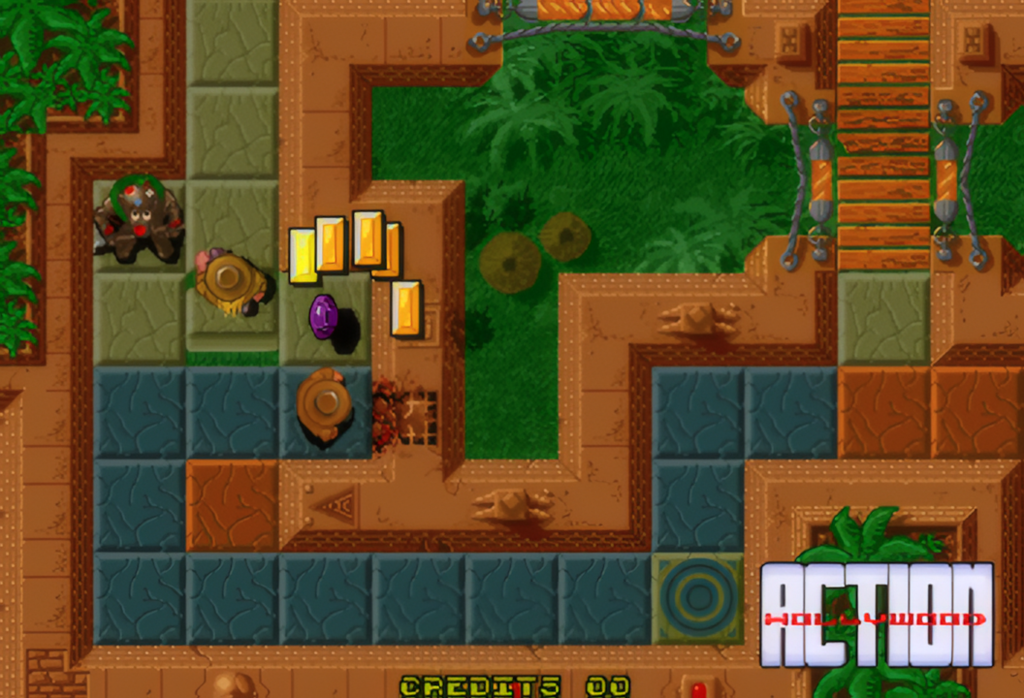
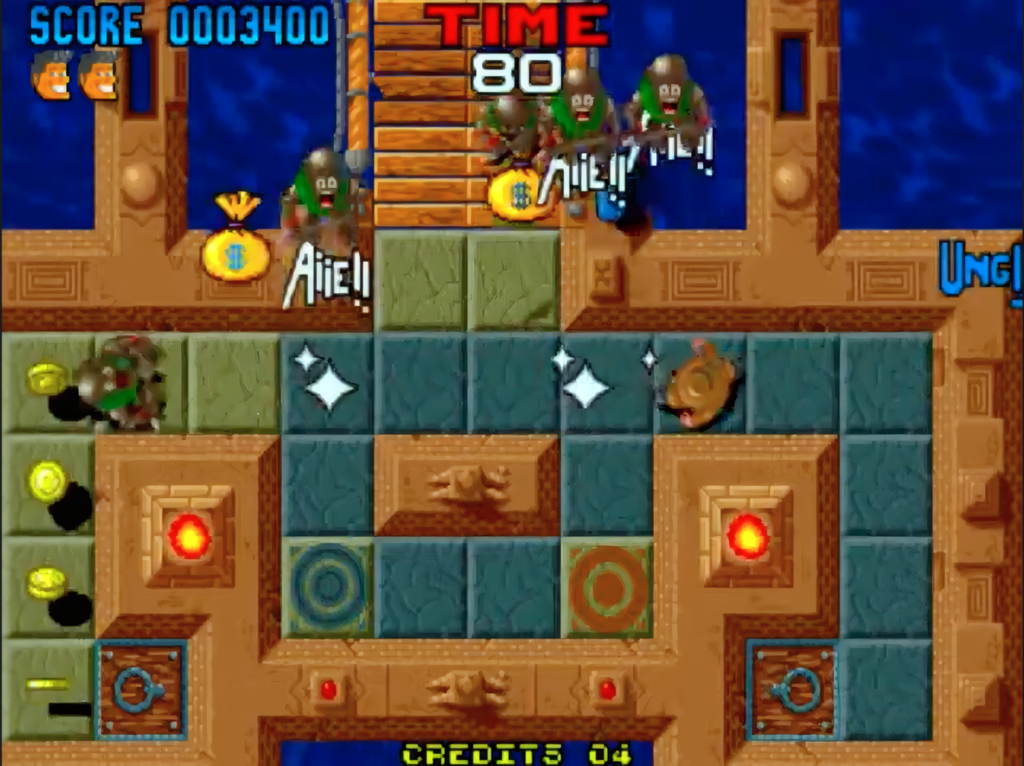
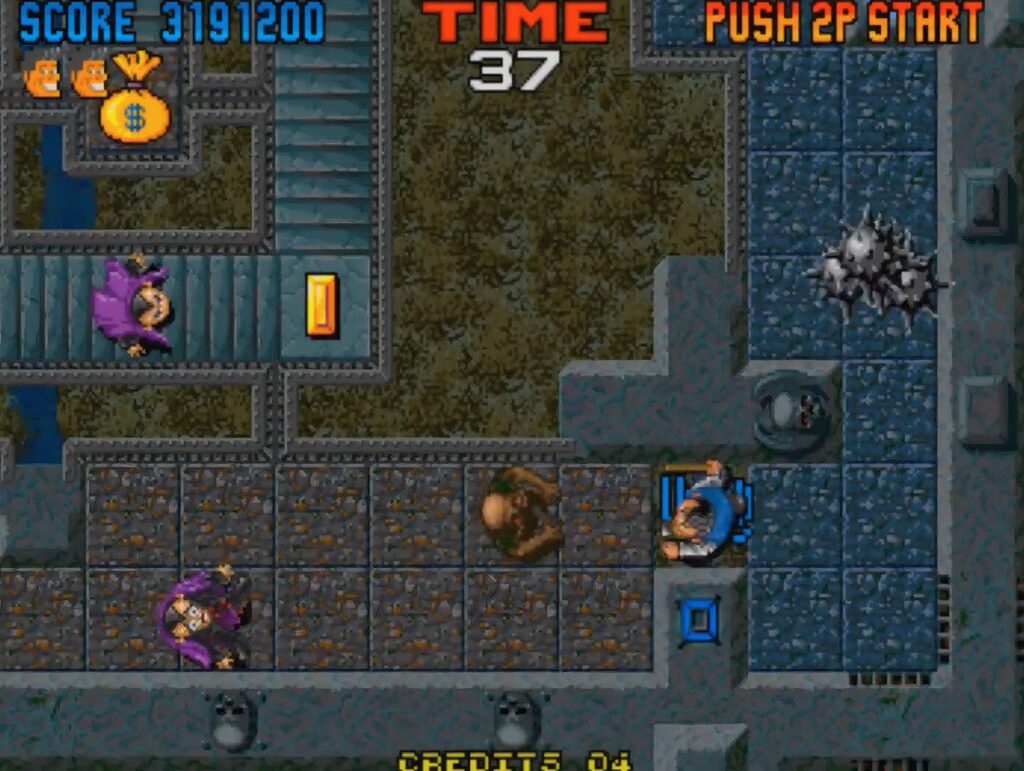
The stage roster is split into four sharply different visual registers, each conceived as a small standalone "feature": Temple of Chaos, an archaeological adventure in the spirit of Indiana Jones; Excaliwood, a medieval fantasy drawing on John Boorman's Excalibur; Transilvania, a gothic horror setting; and Galaxy War, a science-fiction space opera. The art direction by Jose Luis Sánchez Romero, trained at the Escola de Còmic Joso, gives the whole the look of a comic book in motion, with expressive animations and on-screen visual onomatopoeia.
Technically, the game runs on Proyesel's PRO-3/B board, driven by a Motorola 68000 at 12 MHz. The graphics system splits the image into an 8 x 8 tile plane reserved for the HUD, two 16 x 16 tile planes with parallax scrolling for the backgrounds, and an independent sprite RAM for characters and enemies. Sound is handled by an OKI 6295 chip, sequenced through an auxiliary PIC 16C57 microcontroller that coordinates music and effects to offload the main CPU, and which doubles as a rudimentary anti-piracy layer. The soundtrack started from an Amiga tracker MOD that was taken apart and rebuilt as samples for the OKI 6295.
The game's engine and core logic are written entirely in 68000 assembly. It is built on top of a map editor and an event-scripting system designed by Xavi Artigas, which allowed level content to be iterated without touching the code. Enemy AI is implemented as a state machine over the grid, with line-of-sight detection through simplified raycasting, along the lines of the approach id Software had applied in Wolfenstein 3D. The shipped version uses three behaviours —patrol, pursuit and trap— on top of a system designed to support a much wider range, a limitation imposed by the project's rushed close.
Action Hollywood was preserved years later in MAME. The original driver was written by David Haywood between 2003 and 2005. The physical boards and authorship documentation were tracked down by David Torres (Retrolaser.es and Recreativas.org). For a long time, however, emulated sound played incorrectly because the PIC 16C57 code was locked by the "Code Protection Bit"; the functional reverse-engineering that finally resolved the audio side was carried out by Tomás García Merás, by analysing the live data exchange between the PIC and the 68000.
Links
Wikipedia IGDBReleases
Screenshots
Credits
| Design | |
| Design | |
| Programming | |
| Programmer | |
| Programmer |