
Information / Synopsis
LineUp is a competitive puzzle arcade game developed by Ecogames in 1994, programmed by Marcos Hernández with the decisive collaboration of Xavi Artigas and graphic design by Jose L. Sánchez. It shared hardware with Twins, within the catalogue of the Sabadell studio.
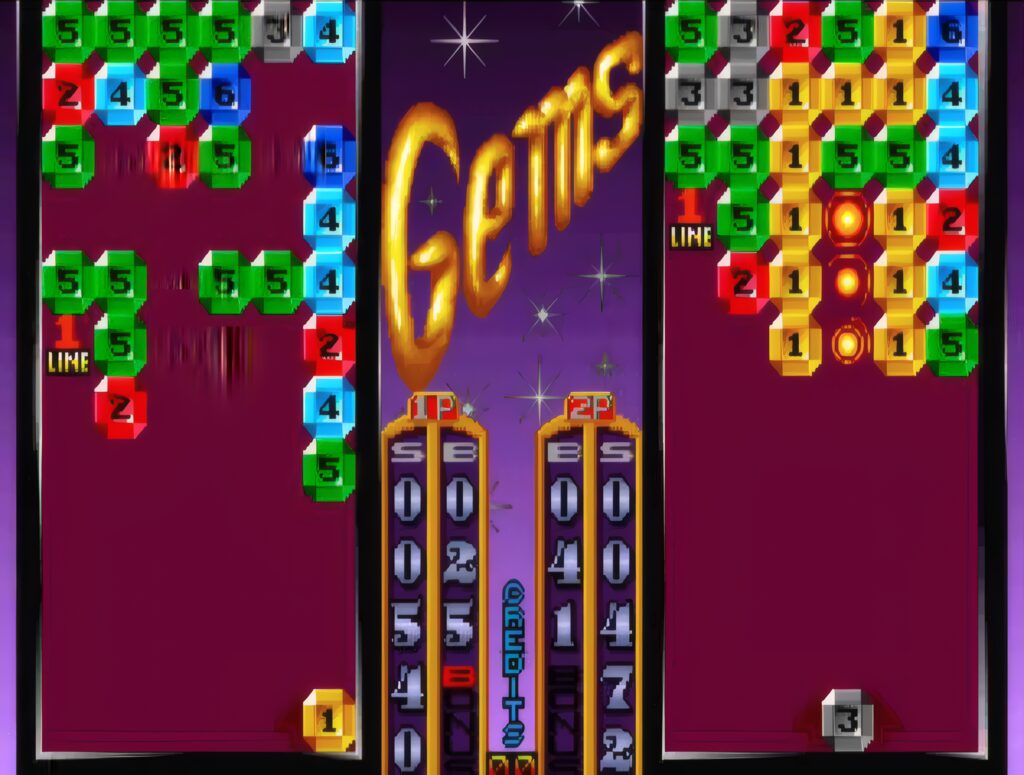
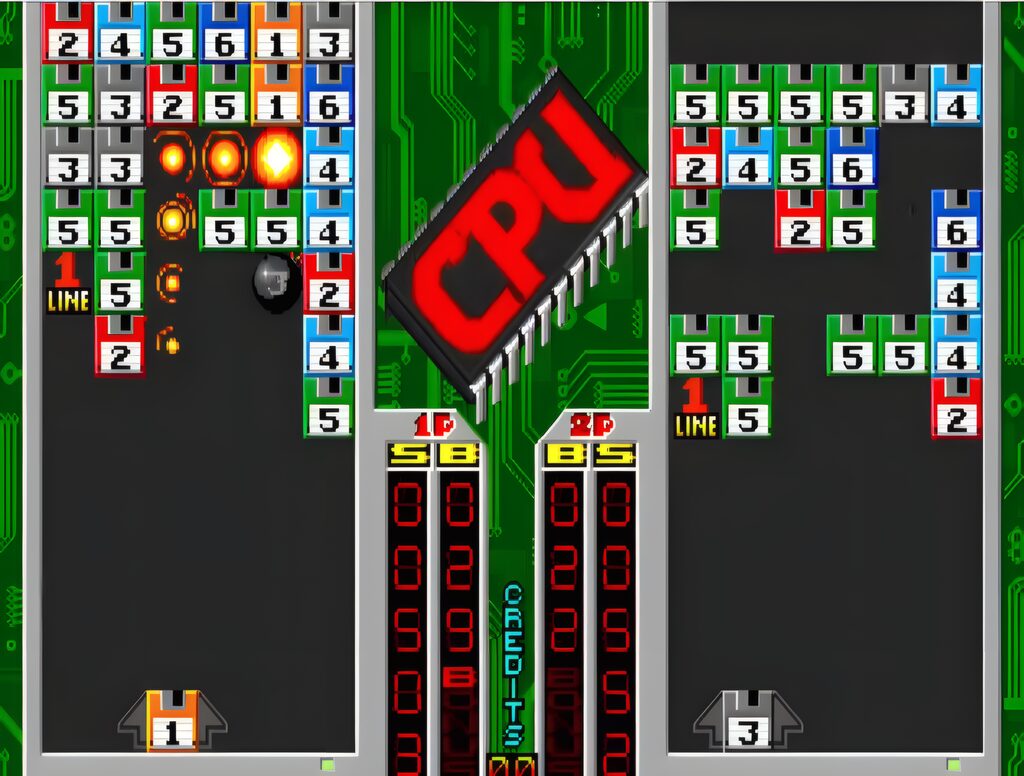
The game is a "Columns-style" tile puzzle, a blend in the vein of Tetris and the colour-matching puzzles that dominated arcade halls in the early nineties. The screen is split into two identical playfields, one per contender, which allows for both single-player matches against the CPU and live two-player duels. Each round asks the player to line up the tiles that appear on their side of the board —combining colour and number— while managing the steadily increasing drop speed and the pressure of the rival, advancing in parallel on the other side of the screen. The design is fast, varied and built for short, intense sessions, tailored to a bar arcade cabinet.
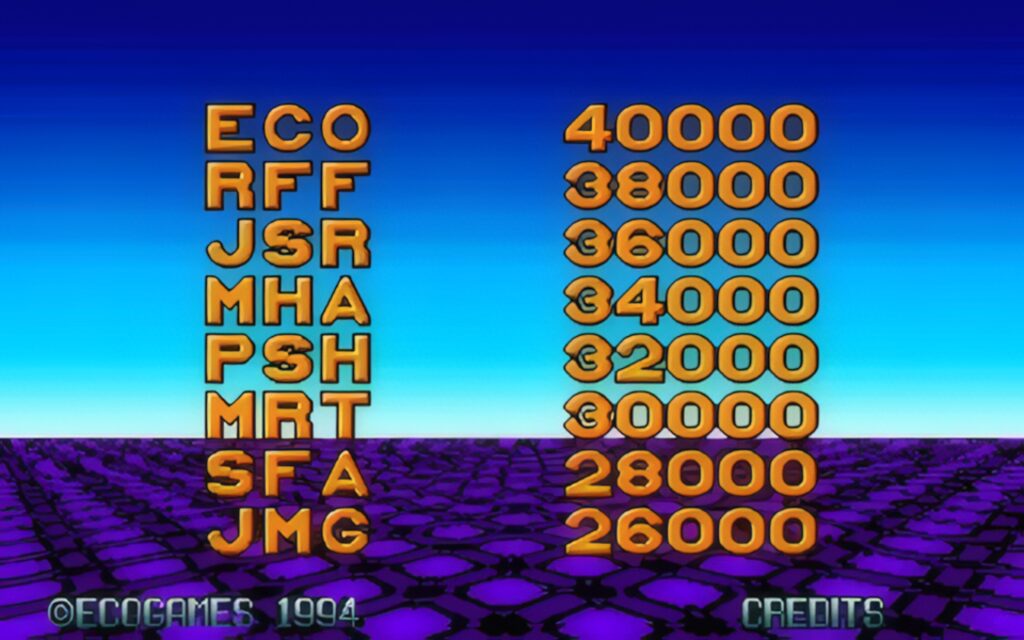
Visually, LineUp stands out for a detail unusual on its hardware: a title screen with an emulated "Mode 7" effect, in which the chequered floor of the logo slides and rotates in the kind of pseudo-3D that Nintendo's console had made popular. Reproducing that effect on a humble NEC V30, with no hardware graphics acceleration whatsoever, meant calculating every horizon line and writing it directly to video memory on every frame.
Technically, LineUp runs on the same board designed by Salvador Casamiquela (GAMART) that had powered Twins: a system based on the NEC V30 at 10-12 MHz, with a linear video buffer, a programmable palette and an AY-family sound chip. With no double buffer, no hardware scrolling and no sprites, all drawing was resolved by writing directly to video memory, squeezing CPU cycles as if every instruction cost gold. The game is written entirely in assembly.
Behind its on-time delivery there is a story that deserves to be told in its proper place: a hard-drive failure a few days before the deadline, a hundred-hour session with barely any sleep, and the definitive consolidation of Ecogames' creative core. That part —and what has become of LineUp's source code three decades later— is told in Diario de un desarrollador de juegos arcade, Marcos Hernández's autobiographical section published within Javier Sancho's book La edad oscura del videojuego español de los 90 - Volumen 2.
Links
Releases
Screenshots
Credits
| Design | |
| Design | |
| Programming | |
| Programmer | |
| Programmer |